
A backyard project is one of the larger checks most families write, and the quality of the result comes down to one decision made early: who builds it. This guide is the one we would hand a friend. It covers how to verify a Minnesota contractor, the questions that actually tell you something, the red flags the state itself warns about, and what a real quote looks like, so you can compare companies on the same footing.
It was first published in 2025 and updated in October 2026 to cover the whole Twin Cities and the licensing rules as they stand today.
Start with the paperwork
Before you fall in love with a portfolio, confirm three things.
Insurance. Ask for a certificate of general liability insurance and workers’ compensation coverage, issued by the insurer, naming the company. A crew working on your property without workers’ compensation can become your liability.
License, where it applies. Minnesota does not license landscaping itself as a trade, but the Minnesota Department of Labor and Industry requires a residential building contractor license for companies that perform more than one building trade on a home. A pergola with electrical and a gas fire feature, or a pool with its own permits, puts a project in that territory. The trades inside the project (electrical, gas, plumbing) are licensed individually and inspected by the city. You can look up any state license at dli.mn.gov.
A real address and a real history. The state’s own consumer guide suggests asking how long the business has operated and asking for a physical Minnesota address rather than a P.O. box. A company that has been building here for decades has a track record you can check; look at Google reviews, the Better Business Bureau and the state court records search.
Red flags, straight from the state
The Department of Labor and Industry’s consumer guide lists the warning signs it sees most, and we would add a few from our side of the table:
- An unmarked truck and no company name on anything.
- A bid that is dramatically lower than the others. Something was left out, usually the base, the drainage or the warranty.
- Pressure to sign today for a “special price.”
- One number with no line items. You cannot compare it, and you cannot tell what is excluded.
- No written warranty, or a warranty that lives in a handshake.
- Most of the money due before work starts.
- No license or insurance paperwork when you ask. Reputable companies expect the question.
The questions that separate the good ones
Ask every contractor the same list and write down the answers.
- Who designs this, and will I see it before you build? A sketch on graph paper and a full 3D design are different products. If you cannot see the layout, the materials and the grades before construction, you are buying the contractor’s imagination.
- Who is on site every day, and who do I call? The answer should be a name and a phone number, not “the crew.”
- What exactly is included, and what is not? Base depth and material, drainage, edge restraint, lighting, irrigation, plantings, lawn repair, permits, engineering, restoration of the areas the equipment drives over. The excluded list is where surprises hide.
- How do you handle changes and surprises? Rock, water, an unmarked line, a change of mind. The answer should be a written change order with a price before the work is done.
- What is the warranty, in writing, and who honors it? Materials come with manufacturer warranties; the workmanship warranty is the contractor’s. Ask what is covered, for how long, and what voids it.
- Can I see three projects like mine, and may I talk to those homeowners? Photos are easy. A homeowner who will take your call is not.
- When would you start, and how long will it take? Honest contractors book out. If the answer is “next week” in June, ask why. Our timeline guide explains how the Minnesota season works.
- Who pulls the permits? For walls over about 4 feet, pools, pergolas with utilities and anything near a shoreline, someone has to. It should be the contractor.
What a real quote looks like
A quote you can compare has:
- A drawing or design the price is based on.
- Line items by phase: demolition and excavation, grading and drainage, walls, hardscape, structures, utilities, lighting, plantings, lawn.
- Materials named: the paver, the wall block, the stone, the pergola brand, the plant sizes.
- The base specification for any hardscape. In Minnesota, the compacted base and the drainage are what the patio is standing on; a quote that does not describe them is not quoting a Minnesota patio.
- Permits and engineering, included or excluded, stated.
- A payment schedule tied to milestones, and a written warranty attached.
If two quotes differ by 30 percent, the difference is usually in that list, not in the price of pavers. Our cost guides give you the ranges to check against: paver patios, retaining walls, outdoor kitchens, pergolas, pools and complete backyards.
Landscaper, design-build, or landscape architect?
A landscaper or installer builds what you or someone else designed. Good ones are excellent at a patio or a wall; the design, the permits and the coordination between trades are on you.
A design-build company designs the project, prices it from the design, and builds it with one accountable team. You pay a design fee up front, usually credited toward the installation, and in exchange you see the whole project before anything is built and one company is responsible for the result. This is how we work; the process is on our landscape design page.
A landscape architect produces a design and documents, and you bid the construction to contractors. The right choice for complex sites and for homeowners who want independent design, with a longer timeline and more coordination.
None of these is wrong. The mistake is hiring an installer and expecting design, or hiring a designer and expecting someone to build it.
Where we fit
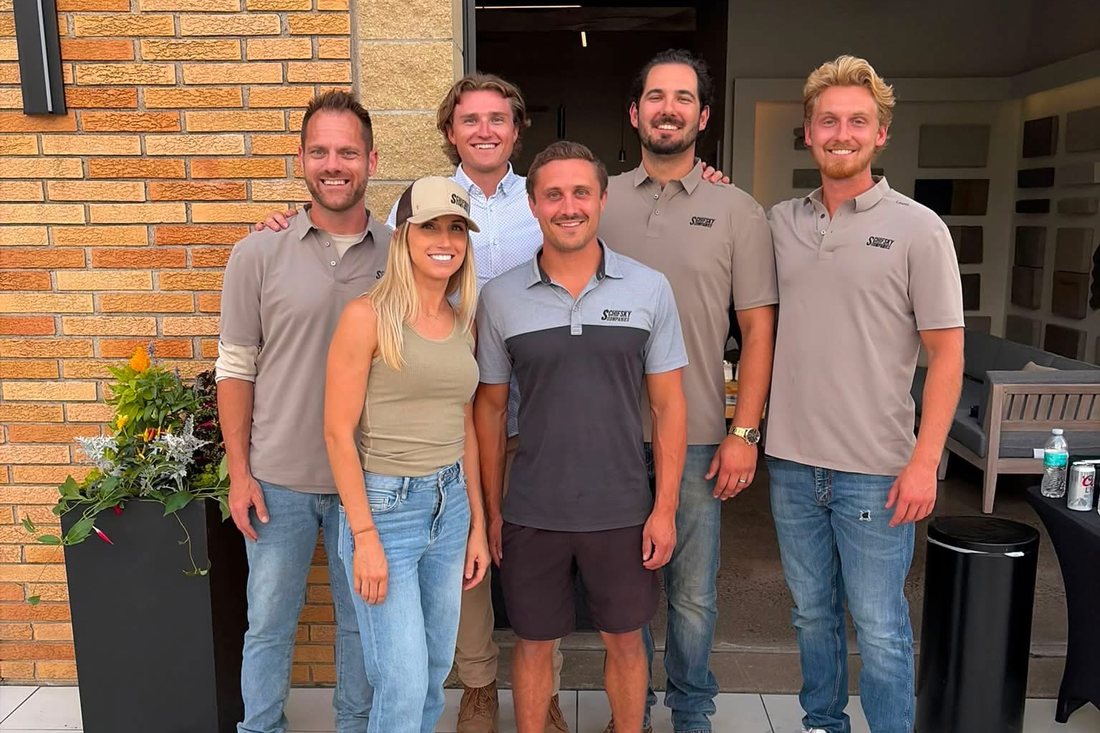
Schifsky Companies has been designing and building Twin Cities backyards since 1989, when the company started in Stillwater with retaining walls and paver patios. Today we are a family-owned design-build firm based in Lake Elmo with a design showroom you can visit, a 3D design process, our own crews, fiberglass pools through our sister company Blaiser Pools, and a written material and craftsmanship warranty. Our portfolio and reviews are the “three projects like yours” and “homeowners you can talk to” part of the list above.
Whoever you hire, ask the questions. A company that builds well will have good answers, and the ones that do not will show you quickly.